14
No. of Vendors
21
No. of Products
11
Verified Products
CHECKOUT OUR LATEST ARTICLE

Products (21)
AI Powered
AI-Driven No Show and Fake Reservation Catcher
by RobosizeME

Vendor verifiedAI Powered
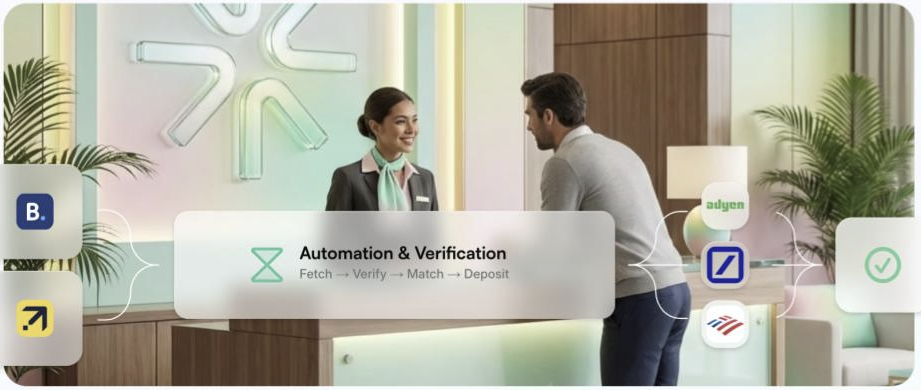
Payment/Deposit Automation
by RobosizeME
Vendor verifiedReservation Quality Check
by RobosizeME
Vendor verifiedCommission Tracking
by RobosizeME
Vendor verifiedRate Loading
by RobosizeME
Vendor verifiedProcess Automation (RPA)
by RobosizeME
Vendor verified
Reservation Sanitizer
by Aphy
Vendor verified
Data Whizz
by Aphy
Vendor verified
Payment Genius
by Aphy
Vendor verifiedAutomation Solutions for hotels
Hotel operations involve thousands of repetitive, rule-based tasks every day. Reservation quality checks, rate loading, commission tracking, payment processing, guest communication workflows, and data reconciliation all consume staff time that could be directed toward guest interaction and service delivery. Automation solutions address this by removing the human effort from tasks that technology can execute faster, more accurately, and more consistently.
Automation Solutions in hospitality are technology platforms and tools that automate routine operational and back-office workflows across hotel departments. From robotic process automation (RPA) handling repetitive data tasks to AI-powered workflow tools managing reservation quality and distribution processes, modern automation solutions integrate with property management systems, channel managers, central reservation systems (CRS), and revenue management systems (RMS) to create connected, low-intervention operational environments.
What are Automation Solutions for hotels?
Automation
Solutions
in hospitality refer to the platforms and tools that replace manual, repetitive
processes with automated workflows. This covers a broad spectrum from robotic
process automation (RPA) that executes rule-based tasks across existing
systems, to AI-powered tools that check reservation quality, automate rate
loading, track commissions, reconcile payments, and manage data workflows
without manual intervention.
Common
automation application areas in hotels include:
•
Reservation quality checking and sanitization across booking
channels
•
Rate loading and rate parity management across distribution
systems
•
Commission tracking and reconciliation
•
Payment processing automation and reconciliation
•
Data extraction, transformation, and reporting workflows
Why do Automation Solutions matter for hotels?
Every
manual, repetitive task in hotel operations represents a cost in staff time and
a risk of human error. Reservation quality issues that slip through manual
checks lead to guest complaints. Rate loading errors create distribution
inconsistencies that damage revenue and rate parity. Commission reconciliation
done manually produces errors that cost money. Automation eliminates these
failure modes systematically.
•
Manual processes create errors that automation prevents: reservation
sanitization, rate loading, and commission tracking done manually produce the
errors that create downstream operational and commercial problems
•
Staff time spent on repetitive tasks is expensive and
misallocated: skilled hotel operations staff performing data entry and
reconciliation work are not delivering the guest-facing value their roles could
create
•
Scale amplifies the cost of manual processes: operational workflows
that are manageable manually at one property become unsustainable at ten or
twenty without automation
•
Process consistency requires automation: manual workflows
produce inconsistent outcomes depending on the individual performing them,
while automated processes execute identically every time
What problems do Automation Solutions help solve?
•
Reservation quality errors reaching guests: automated reservation
quality checking identifies and flags errors in booking data before they create
guest experience failures
•
Rate loading inconsistencies across distribution channels: automated rate
loading ensures pricing is applied correctly and consistently across property
management systems, channel managers, and central reservation systems (CRS)
•
Commission tracking gaps creating revenue leakage: automated commission
tracking against booking and payment data identifies discrepancies that manual
reconciliation misses
•
Payment reconciliation consuming finance team time: automated matching of
payment data against reservation records eliminates the manual reconciliation
workload
•
Data workflows requiring ongoing manual intervention: RPA and automation
tools execute repetitive data processes continuously without requiring manual
triggering
What capabilities should hotels expect from Automation Solutions?
•
Robotic process automation (RPA) for rule-based task execution
across existing hotel systems
•
Reservation quality checking and automated error flagging
•
Rate loading automation across property management systems and
channel managers
•
Commission tracking and reconciliation automation
•
Integration with property management systems, channel managers,
central reservation systems (CRS), and revenue management systems (RMS)
How do Automation Solutions fit into the hotel technology ecosystem?
•
Property management systems: automation tools execute workflows
against PMS data including reservation processing, rate management, and guest
record maintenance
•
Channel managers: automated rate loading and availability
management connects with channel managers for consistent distribution across
all booking channels
•
Central reservation systems (CRS): automation ensures
rate and inventory data in the CRS is accurate, current, and consistent with
the PMS
•
Revenue management systems (RMS): automated data
workflows support the data quality that revenue management systems depend on
for accurate demand forecasting and pricing recommendations
•
Financial accounting platforms: payment automation
and commission reconciliation connects with hotel financial accounting for
accurate revenue reporting
Which hotel types benefit most from Automation Solutions?
•
Hotels with high reservation volumes: where the volume of
bookings across multiple channels creates reservation quality and rate loading
workloads that manual processes cannot manage consistently
•
Multi-property hotel groups: where standardized automation
workflows deliver consistent operational quality across properties while
reducing total back-office staffing requirements
•
Hotels with complex distribution environments: where multiple OTA
relationships, GDS connectivity, and direct booking channels create rate
loading and commission management complexity that automation addresses
•
Hotels pursuing operational efficiency improvement: where the cost of
manual processes across finance, distribution, and operations justifies
automation investment
What should hotels evaluate before selecting Automation Solutions?
•
Integration with existing systems: automation tools must
connect reliably with the specific PMS, channel manager, and CRS the hotel
operates
•
Process coverage breadth: assess which specific workflows the
platform automates and whether these align with the hotel's highest-priority
manual process pain points
•
Configuration flexibility: automation rules and workflows must be
configurable to reflect the hotel's specific operational processes rather than
a generic default
•
Error handling and exception management: automated workflows
must have clear escalation paths for exceptions that require human judgment
•
Monitoring and reporting: visibility into automation performance
and exception rates is essential for maintaining confidence in automated
processes
What common mistakes should hotels avoid?
•
Automating broken processes without fixing them first: automation amplifies
process errors at speed. Processes with fundamental workflow or data quality
problems must be corrected before automation is applied
•
No exception management design: automation without
clear human escalation paths for exceptions produces failures that go unnoticed
until they create operational or financial problems
•
Insufficient staff communication about automation deployment: teams whose workflows
are being automated need to understand what changes and what their new
responsibilities are
•
Over-automating guest-facing interactions: automation is most
valuable for back-office and data tasks. Guest-facing interactions that benefit
from human judgment should be automated selectively
How have Automation Solutions evolved?
Hospitality
automation has evolved from basic scripted macros and scheduled reports into
intelligent workflow platforms with AI-supported decision making. Early
automation in hotels focused on night audit processes and batch reporting. The
introduction of RPA tools from around 2018 significantly expanded what could be
automated across distribution, finance, and operations. By 2025, AI-enhanced
automation tools capable of handling exception management and adaptive
workflows had begun to reshape what hotel back-office automation could achieve.
What trends are shaping Automation Solutions?
•
AI-enhanced process automation: machine learning is
adding intelligent exception handling and adaptive decision-making to
automation workflows that previously required rule-based logic
•
Hyperautomation across hotel operations: hotels are expanding
automation from isolated processes to connected end-to-end workflow automation
across multiple systems
•
No-code and low-code automation tools: platforms that allow
hotel operations teams to build and modify automation workflows without
technical development skills are democratizing access to automation
•
Integration with AI agents: automation platforms are beginning to
connect with AI agents that can handle more complex, judgment-based tasks
alongside rule-based automation
What impact can Automation Solutions deliver?
•
Reduced manual operational workload freeing staff for
guest-facing roles
•
Eliminated process errors in reservation quality, rate loading,
and commission management
•
Consistent process execution regardless of staffing levels or
time of day
•
Measurable cost reduction in back-office operational functions
What should hotels prioritize when comparing Automation Solution providers?
Hotels
evaluating Automation Solutions should look beyond feature lists and assess how
effectively a platform integrates with their specific technology stack, covers
their highest-priority manual processes, and provides the monitoring and
exception management needed to trust automated workflows at operational scale.
•
System integration coverage: the platform must connect with the
hotel's actual PMS, channel manager, and CRS infrastructure
•
Process coverage alignment: automation capabilities must address
the specific workflows creating the most significant manual burden
•
Exception management quality: automated processes
must have reliable escalation paths for situations requiring human judgment
• Monitoring and performance visibility: operators need clear visibility into automation performance and exception rates
Start your comparison
on ExploreTECH
News (5)

RobosizeME secures $2 Million Seed Round
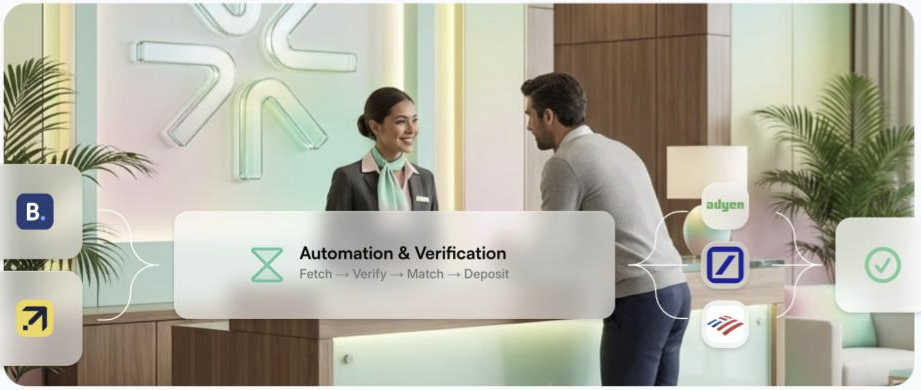
RobosizeME secures $2 Million Seed Round
.png)
The operational tax hotel groups don’t realize they’re paying

The hidden cost of inconsistency: why manual workflows are holding back hotel groups

Is AI going to make hotel websites obsolete?
Blogs (5)
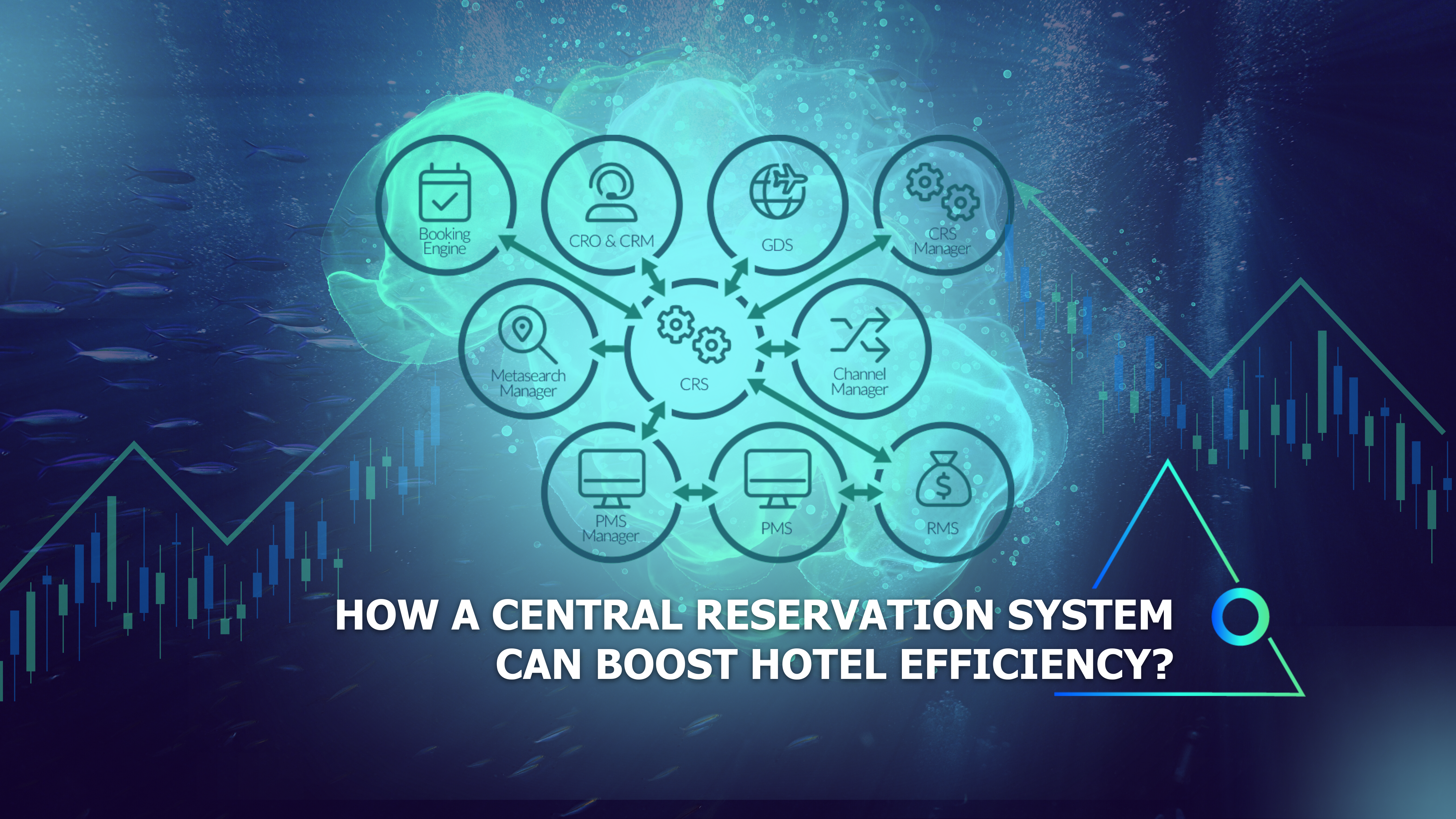
Boost Hotel Efficiency with a Central Reservation System (CRS)

Disruptive Trends & the Future of Hospitality

The Impact of Hotel CRM on Customer Loyalty
Choosing a Revenue Management System for Your Hotel

7 Ways Hospitality Technology Enhances Hotel Operations & Profitability