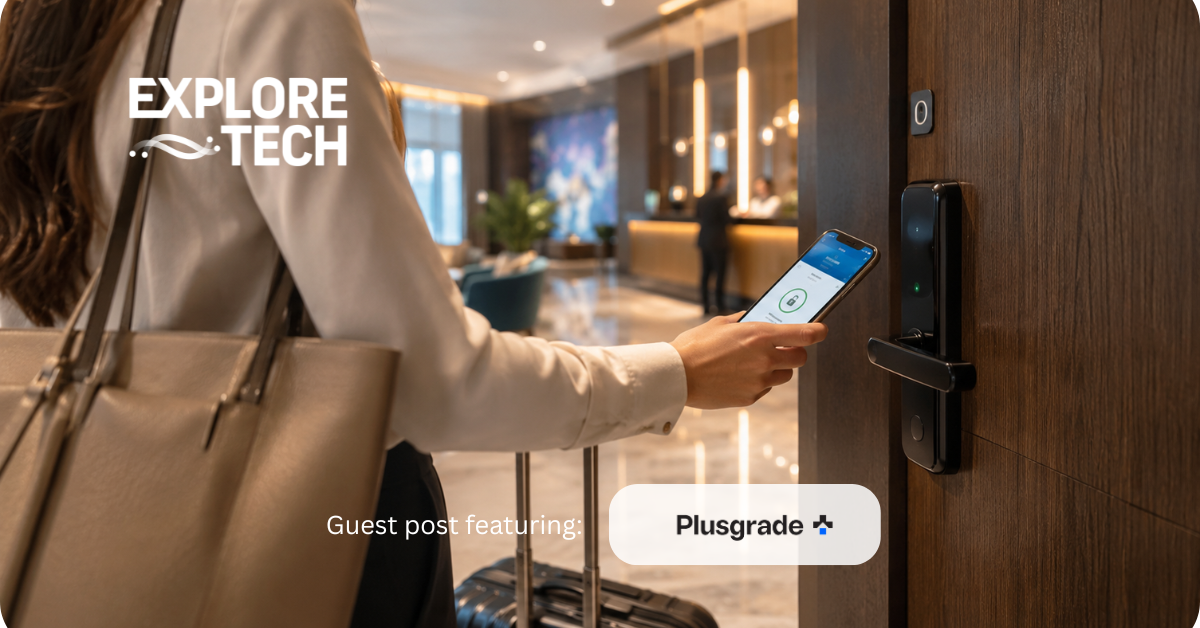
Picture this: a guest arrives at your hotel after a long journey. They've already checked in on their phone, verified their identity, selected a room upgrade, reserved a dining experience, and received a mobile room key. Instead of joining a queue at reception, they head straight to their room.
Not long ago, this would have felt like a glimpse into the future. Today, it's quickly becoming an expectation.
Across hospitality, mobile keys, digital identity verification and self-service technologies are transforming how guests interact with hotels. The traditional check-in process is no longer the starting point of the guest journey. Instead, many of the decisions that shape a stay are now made before a guest even reaches the lobby.
To explore how these changes are reshaping the role of the front office, we spoke with Erik Tengen, President, Hospitality Upsell, Plusgrade, to understand how digital access, personalization and pre-arrival engagement are changing the way hotels connect with guests.
The key takeaway? The front desk is not disappearing. It is evolving.
As technology takes care of more routine administrative tasks, front office teams have an opportunity to focus on what has always defined great hospitality: creating relationships, anticipating needs and delivering memorable experiences.
The hotels that succeed in this new environment won't simply be the ones adopting more technology. They will be the ones using technology to create a connected guest journey where every interaction, whether digital or human, feels like part of the same conversation.
The front desk is becoming a service hub
For generations, the front desk has been the operational heart of the hotel. It was where guests checked in, collected room keys, confirmed reservations, settled payments and asked questions about their stay.
Today, many of those processes can happen long before arrival.
Digital identity verification allows guests to complete security checks remotely. Mobile check-in reduces friction. Mobile keys remove the need for physical room cards, while self-service options allow guests to move through arrival at their own pace.
Rather than replacing the front desk, these technologies are removing much of its transactional workload.
According to Tengen, this represents a fundamental shift in the role of front office teams.
"The front desk hasn't been replaced; its role has shifted," says Tengen. "When a guest has already selected a room view, placed a bid on an upgrade, or booked a dining experience before arrival, the desk becomes less about presenting options and more about delivering on choices already made."
The front desk is no longer the first moment of choice. Instead, it becomes the place where those decisions are completed.
As Tengen puts it, "The desk is no longer the first moment of choice. It's where the right choices get closed."
Rather than introducing guests to every available option, staff can build on preferences guests have already expressed and focus on delivering a more personal welcome.
The guest journey starts long before arrival
Perhaps the biggest shift isn't happening in the lobby at all. It's happening in the days between booking and arrival.
The pre-arrival window has become one of the most valuable opportunities hotels have to engage guests, generate ancillary revenue and create more personalized stays.
Guests can browse available upgrades, purchase experiences, arrange transportation, reserve dining or request amenities before they travel.
When done well, these interactions don't feel like sales opportunities. They feel like helpful tools that allow guests to shape their stay around their own needs.
For hotels, every interaction also creates valuable insight.
Tengen believes personalization is most effective when it is based on guest behavior rather than assumptions.
"The most effective version isn't a generic email," he explains. "It's a timed, relevant offer built from what reservation data and bidding behavior already tell you: who this guest is, what they engaged with, what they bid on, and what they're most likely to value on this stay."
This represents a shift from broad personalization to more meaningful relevance.
Instead of simply knowing that a guest has stayed before, hotels can understand what they are interested in during this specific stay.
Turning guest signals into better conversations
One of the biggest misconceptions about digital guest journeys is that fewer face-to-face interactions automatically mean less hospitality.
In reality, digital engagement can make personal interactions more valuable.
When guests complete routine tasks before arrival, hotel teams spend less time collecting information and more time using it.
Every preference, search, interaction and decision creates context that helps staff better understand the guest standing in front of them.
Importantly, even decisions that don't lead to an immediate purchase can provide meaningful insight.
"A bid that wasn't accepted isn't a failed sale," says Tengen. "That guest has told you exactly what they wanted and what they were willing to pay."
That information can shape the next interaction.
A guest who explored a suite upgrade, requested certain amenities or showed interest in a specific experience arrives already primed for that conversation. Instead of starting from scratch, staff can continue a journey the guest has already begun.
This creates a very different type of service interaction. The conversation becomes less about offering everything and more about understanding what matters most to that individual guest.
Creating a seamless handoff between technology and people
The most successful digital guest journeys don't end when a guest arrives. They create a smooth transition between technology and human service.
Automation can handle discovery, convenience and routine tasks. The front office can then focus on the relationship.
This handoff only works when systems are connected.
Mobile keys, digital identity verification, guest messaging, payment platforms, revenue tools, property management systems and customer profiles all need to work together to create a complete picture of the guest journey.
When these systems operate independently, experiences become fragmented. Guests repeat information, staff lack context, and opportunities to personalize service are lost.
When technology works together, the experience feels continuous.
A guest who has completed mobile check-in should not need to repeat the same information at reception. A guest who expressed interest in an upgrade should not receive a generic offer that ignores their previous engagement.
The goal is not more technology for the sake of technology. The goal is creating a journey where every interaction builds naturally on the one before it.
Finding the balance between automation and hospitality
As hotels continue investing in digital experiences, one question remains: how much automation is the right amount?
The answer depends less on the technology itself and more on how thoughtfully it is implemented.
Some guests appreciate the ability to move through the hotel without stopping at reception, especially after a long journey. Others still value a personal welcome or need assistance with specific requests.
The best guest experiences do not force travelers into a single path. They provide choice.
Automation should remove friction from routine processes while allowing hotel teams to focus on the moments where empathy, judgement and genuine hospitality create the most value.
Tengen believes the relationship between automation and human service is not a competition.
"The tension is smaller than it appears, but only when you know exactly where automation stops and where the relationship begins."
He explains that the real opportunity comes from connecting these two parts of the journey.
"When those two moments share data, what each guest engaged with, what they considered, what they didn't confirm, both work better."
The result is not less human service. It is better-informed service.
Preparing front office teams for the future
As the role of the front office changes, so too do the skills needed to succeed.
Administrative efficiency will remain important, but future front office teams will increasingly focus on anticipating needs, personalizing interactions and creating memorable experiences.
Technology will handle more of the repetitive tasks. People will focus on the moments that require emotional intelligence, problem-solving and genuine connection.
This shift requires more than new technology. Hotels also need to invest in training, operational alignment and change management to ensure teams understand how to use the information available to them.
At the same time, digital transformation should always enhance guest choice rather than limit it.
While many travelers welcome mobile-first experiences, others will continue to prefer traditional check-in and face-to-face assistance. Offering flexibility ensures every guest feels comfortable.
The future of the front office
The front desk is not becoming obsolete. Its purpose is changing.
As more administrative tasks move into digital channels, the front office is evolving from a place where transactions happen into a place where relationships are strengthened.
The guest journey begins before arrival, supported by digital access, personalized offers and connected technologies that remove unnecessary friction.
By the time guests reach the hotel, teams can already understand more about their preferences, interests and expectations.
Guests arrive more prepared. Staff arrive better informed.
The future of hospitality is not about choosing between technology and people. It is about using technology to make every human interaction more relevant, more personal and more memorable.
In the new front office, the most valuable key is not simply the one that unlocks the guest room. It is the insight that helps hotels unlock better experiences.